hoosing the Right De-Icing Salt for Your Needs
When winter arrives, one of the most important decisions you can make is choosing the right type of rock salt to keep your surfaces safe and ice-free. The two main varieties — white rock salt and brown rock salt (often called grit) — both work effectively to melt ice, but each has unique characteristics suited to different environments.
This article explains the key differences in composition, appearance, application, and best use cases to help you make the right choice.
⚪ White Rock Salt
White rock salt is a high-purity de-icing salt, carefully refined to remove impurities and clay particles.
🔬 Composition:
- Primarily sodium chloride (NaCl)
- High purity (typically >99% NaCl)
- Washed and screened to remove natural sediments
💡 Key Features:
- Leaves minimal residue, keeping surfaces clean
- Ideal for decorative or public areas where appearance matters
- Often used where salt may be carried indoors (to prevent dirty footprints)
🧱 Common Uses:
- Paths and driveways around homes and offices
- Retail parks, shopping centres, schools, and hospitals
- Steps, entrances, and walkways
⭐ Advantages:
- Clean finish
- Less visible residue
- Doesn’t stain carpets or floors if walked inside
💡 Tip: White salt is often preferred in areas with light-coloured paving or near building entrances where cleanliness is key.
🟤 Brown Rock Salt (Grit)
Brown rock salt is the traditional choice for de-icing roads and large outdoor areas. It is mined in the UK (most commonly from Cheshire) and naturally contains clay, giving it its distinct brown colour.
🔬 Composition:
- Primarily sodium chloride (NaCl)
- Contains natural clay and sediment, making it more visible
- Slightly lower purity (typically 90–95% NaCl)
💡 Key Features:
- Highly visible when spread — easy to see coverage
- More economical for large-scale use
- Provides added traction thanks to clay particles
🧱 Common Uses:
- Roads and car parks
- Industrial estates and loading bays
- Public highways and local authority gritting
⭐ Advantages:
- Cost-effective for large areas
- Better traction on untreated surfaces
- Visibility helps ensure full coverage
💡 Tip: Brown salt is often supplied in bulk bags or pallets of 23kg bags — ideal for councils, businesses, and facilities teams responsible for wider areas.
⚖️ Summary: Key Differences
| Feature | ⚪ White Rock Salt | 🟤 Brown Rock Salt |
|---|---|---|
| Colour | White / light | Brown / reddish |
| Purity | ~99% NaCl | ~90–95% NaCl |
| Residue | Minimal | Leaves clay residue |
| Visibility | Low (discreet) | High (easy to see) |
| Best For | Decorative, clean areas | Roads, car parks, industrial |
| Cost | Premium | More economical |
🧭 Which Should You Choose?
- Choose white rock salt if you want a clean, professional finish — perfect for retail, residential, and foot traffic areas.
- Choose brown rock salt if you need a cost-effective solution for large-scale de-icing, such as roads and car parks.
Many organisations use both — white salt for entrances and walkways, and brown salt for main routes and car parks.
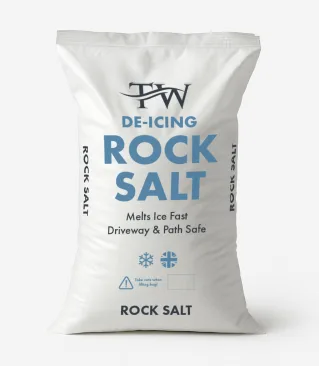
🚚 Available from TW Salt
TW Salt supplies both white and brown rock salt in a range of formats:
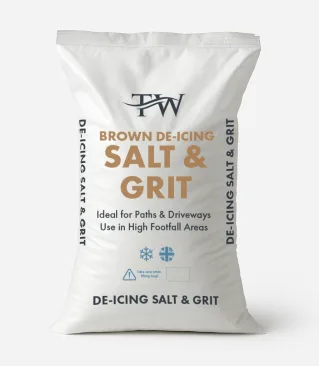
- 23kg handy bags for small sites and homes
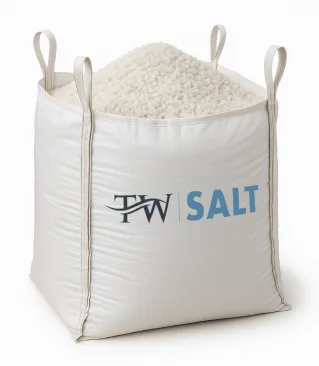
- Bulk bags (~1 tonne) for larger areas
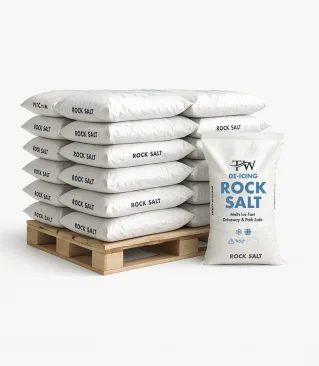
- Full pallets for councils, businesses, and contractors
All products are treated with anti-caking agents for easy spreading and fast nationwide delivery.